South Africa’s first primate archaeology field site
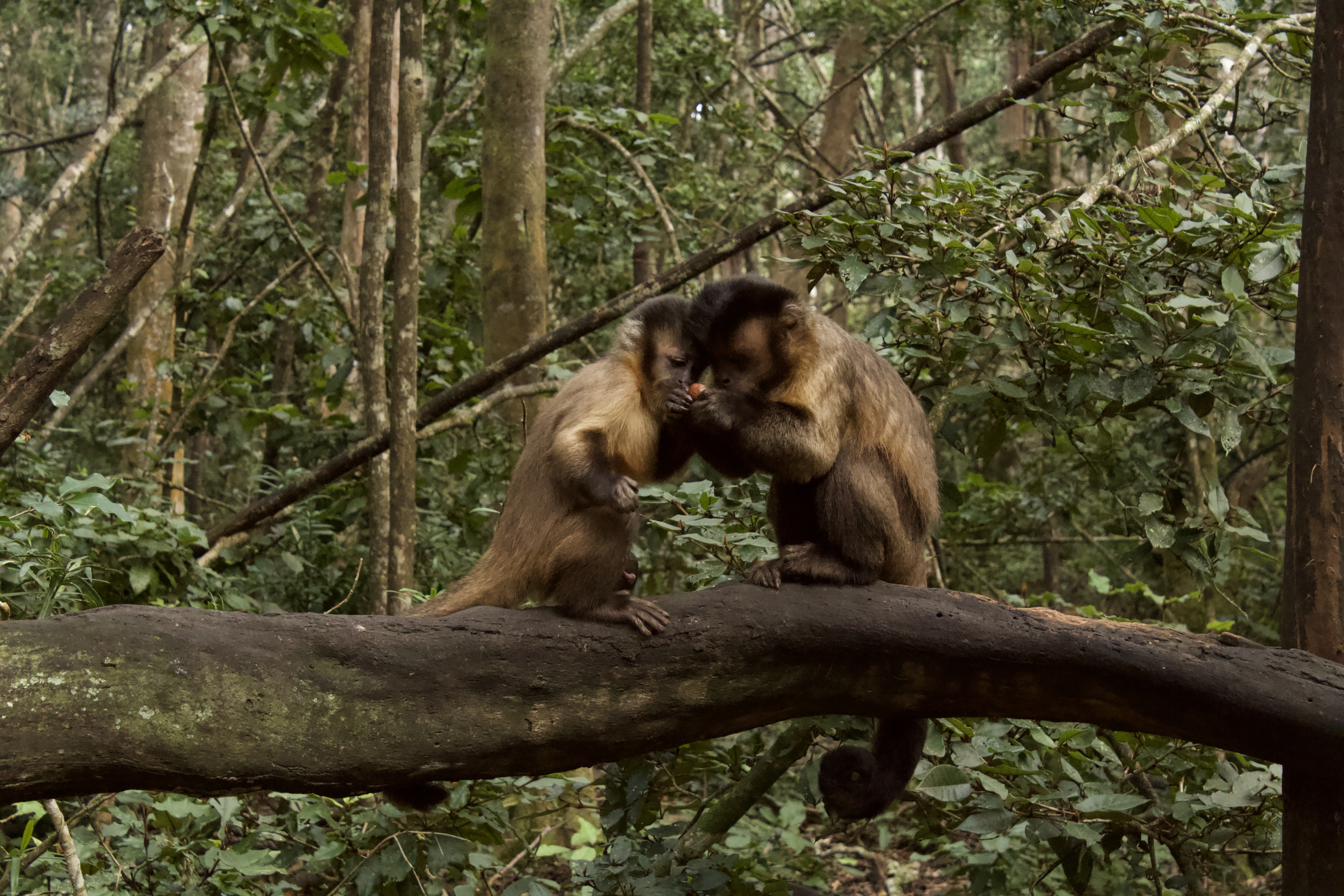


The Ukophula Field Project (UFP) uses primate archaeology to research tool-assisted percussive behaviors in capuchin monkeys. Primate archaeology is a relatively new field that aims to understand extant primate tool-use behavior in tandem with their material culture combining archaeological and primatological methods. This field has the potential to help answer questions about the mechanisms behind human evolutionary events since it allows scientists to connect fossil and archaeological records with possible behaviors that might have created them.
In a a nutshell, the UFP believes that in order to understand present and past technology we need to take a three-dimensional approach connecting the social, material, and spatial context in which tool use and making takes place. Particularly, one of the UFP main goals is to reconstruct the social learning processes and mechanisms of Monkeyland’s capuchin nut-cracking behavior in association with their material culture and environment.
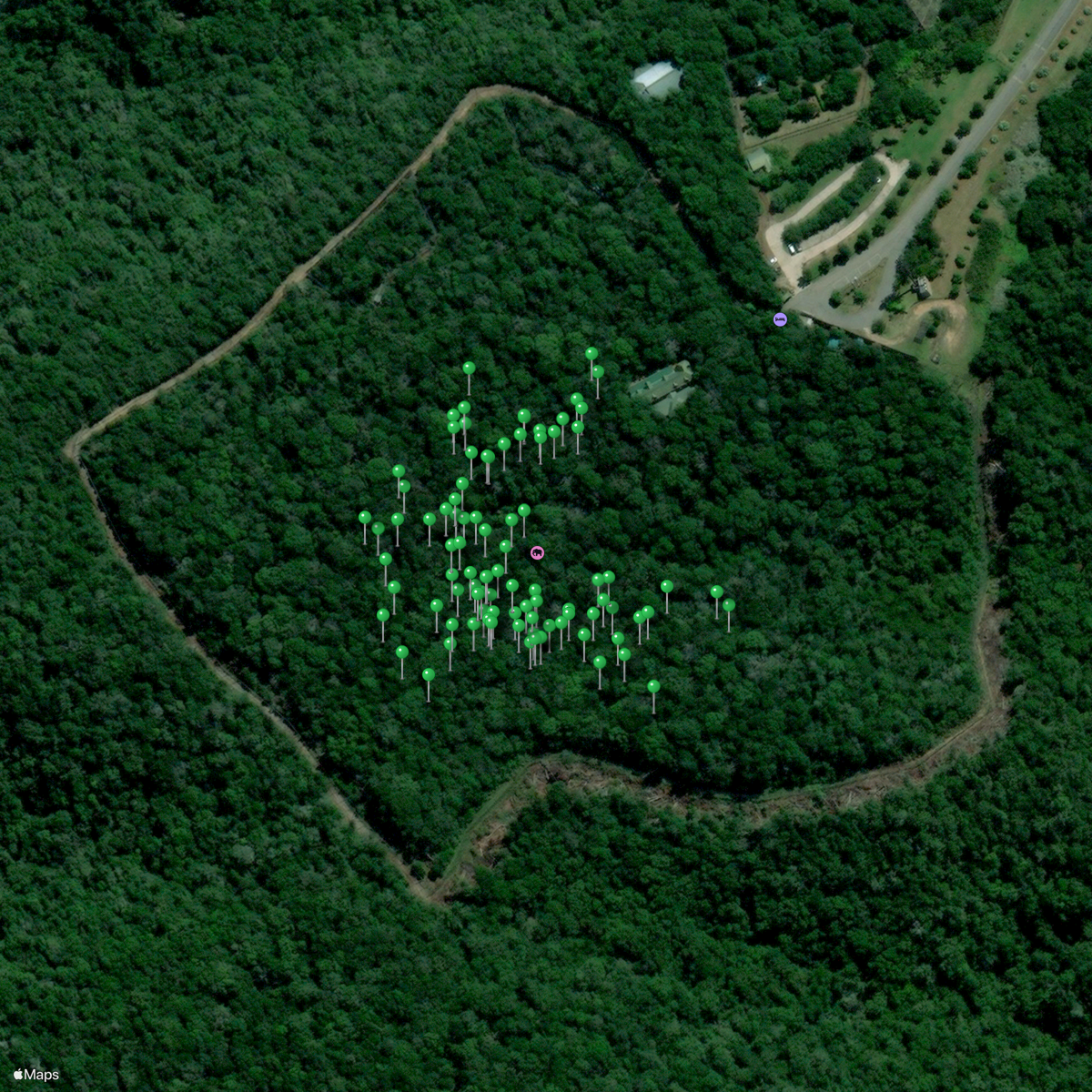
To study the three-dimensional technology concept, the UFP uses a range of methods taken from primatology, archaeology and even biomechanics. In the field, UFP members use camera traps, GoPro cameras, and hand-held tablets to record the nut-cracking behaviors as they are happening. The UFP members also record the material evidence by tracking hammerstone dimensions and developing photogrammetry models.
The UFP is based at both Monkeyland and The Hidden Forest, two multi-species primate sanctuaries located in South Africa. In fact, Monkeyland is the world’s first free-roaming, multi-species primate sanctuary. It was founded in 1998 by Tony Blignaut with the aim to help endangered species and rescue ex-captive primates. Monkeyland’s aim is to provide primates with the opportunity to live in a more natural and autonomous life within a sanctuary. At the moment, Monkeyland is home to 11 species and over 550 primates: black and white ruffed lemurs (Varecia variegata), ringtail lemurs (Lemur catta), black howler monkeys (Alouatta caraya), Bolivian squirrel monkeys (Saimiri boliviensis), Geoffroy’s spider monkeys (Ateles geoffroyi), red-backed bearded sakis (Chiropotes chiropotes), vervet monkeys (Chlorocebus pygerythrus), white-handed gibbon (Hylobates lar), hanuman langurs (Semnopithecus entellus), red-bellied lemurs (Eulemur rubriventer), and, of course, robust capuchin monkeys (Sapajus spp.).
The Hidden Forest Sanctuary is Monkeyland’s sister sanctuary and shares its same goals. It opened to the public in April 2019 and houses 9 primate species in a 23-hectare forest: black and white ruffed lemurs (Varecia variegata), ringtail lemurs (Lemur catta), black howler monkeys (Alouatta caraya), Bolivian squirrel monkeys (Saimiri boliviensis), Geoffroy’s spider monkeys (Ateles geoffroyi), vervet monkeys (Chlorocebus pygerythrus), robust capuchin monkeys (Sapajus spp.), white-faced capuchins (Cebus imitator), and golden-bellied capuchins (Sapajus xanthosternos). The Hidden Forest gives the UFP the opportunity to expand its research goals towards a capuchin cross-species comparison.
Both primate sanctuaries are part of the South African Animal Sanctuary Alliance (SAASA), and are dedicated to raise awareness about wildlife conservation and educate the public on the harmful impacts of the pet trade. Most importantly, these primate sanctuaries are involved in the #HandsOffOurWildlife campaign which aims to highlight the importance of responsible ecotourism and reinforce a strict no-touch policies to ensure the well-being of all animals under their care.
Particularly, Monkeyland pioneered the world’s first real estate initiative for wild animals, known as the “Buy a Square Meter for the Monkeys” campaign. Through this initiative, Monkeyland wants to make sure that monkeys who inhabit the sanctuary become the rightful owners of the forested sanctuary land. This will make sure the animals living at Monkeyland will be able to live peacefully for a very long time.

 ukophulafieldproject.com